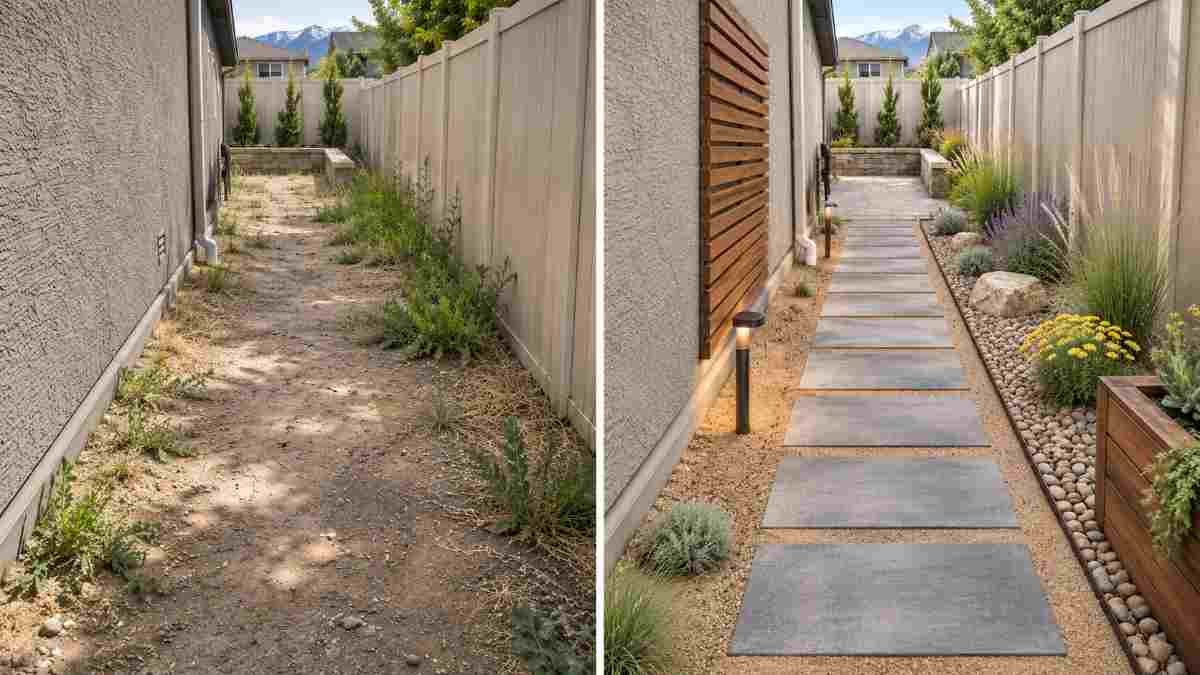
A narrow side yard may only need a clear path, useful storage, or planting that is easy to maintain. An unused corner might work as a small seating area. Start with how you want to use the space, then check access, drainage, and upkeep before adding features.
The best solutions are rarely cosmetic alone. Good design has to account for grading, access, winter conditions, and maintenance. That is why thoughtful Utah landscaping work starts by asking what the space needs to do, not just what it should look like. Cottonwood Landscapes approaches these areas as functional systems, where structure and planting choices need to work together rather than compete.
Why Narrow Spaces Fail When They Are Treated as Leftovers
Most side yards and corner pockets underperform for one of three reasons: they are too tight for casual use, they collect water, or they feel disconnected from the rest of the property. When a space is only a few feet wide, every design decision matters. A walkway that is too narrow can feel pinched. A planting bed that is too deep becomes hard to maintain. A decorative feature without a practical purpose quickly turns into clutter.
The real mistake is trying to force a “main yard” idea into a space that calls for a different strategy. A narrow side run usually needs clarity, not volume. A dead corner usually needs definition, not decoration. Cottonwood Landscapes often treats these areas as transition zones, service paths, or micro-destinations, depending on the site and how the homeowner actually uses the property.
The Hidden Cost of Ignoring These Areas
Unused corners are not neutral. They can invite erosion, weed growth, drainage issues, or unsafe footing. In freeze-thaw climates, those problems often become more visible over time, especially where soil moves or water has nowhere useful to go. A neglected side yard can also make the whole property feel unfinished, even when the primary landscape is strong.
That is why the smartest projects do not start with plants. They start with how to make the space stable, accessible, and purposeful. Once that foundation is right, the rest becomes much easier to execute well. Proper drainage also depends on effective gutter installation.
The Best Uses for Tight Side Yards Are Usually Practical First
A narrow side yard does not need to become a showpiece to be successful. In many cases, the most valuable improvement is the one that makes everyday life easier. A clean pathway, a manageable garden strip, or a better-maintained transition between front and back can dramatically improve how the property functions.
Common high-value uses include:
- A durable side walkway that improves access and keeps traffic off plant beds
- A slim planting zone with drought-tolerant plants and mulch
- A screened utility path that feels intentional rather than exposed
- A compact seating nook for privacy and quiet use
- A passage with low-voltage lighting for safer nighttime movement
- A transition zone that links hardscape, fencing, and rear outdoor living areas
The point is not to fill every square inch. The point is to assign the space a job that fits its scale. Cottonwood Landscapes often recommends a design that balances circulation with softness, so the yard feels intentional without becoming crowded.
When a Walkway Should Replace a Planting Bed
If a side yard is the main route between the front and back of the property, a walkway usually deserves priority. A paver or flagstone path can make the area feel wider and more usable, especially when it is built with clean edges and proper drainage. In a region where thermal movement and winter conditions matter, materials and installation details are just as important as style.
A walkway also solves a common maintenance issue. When people are forced to walk through a narrow planted strip, the bed eventually gets compressed, damaged, or muddy. Replacing that conflict with a defined path often creates a better result than trying to “soften” the route with more planting.
Good Design in Tight Spaces Depends on Structure, Not Ornament
Small spaces are unforgiving. If the grade is off, the wall is poorly built, or the drainage is weak, the problem becomes obvious fast. That is why successful side-yard and corner projects often rely on hardscaping as much as planting. Retaining walls, raised planters, steps, edging, and vertical structures can make awkward areas easier to use while also helping the space feel composed.
Cottonwood Landscapes is especially well suited to this kind of work because the company brings design, construction, and structural judgment together. That matters in Utah, where slopes, soil conditions, and seasonal expansion can affect long-term performance. A corner that looks simple on paper may need more engineering than a homeowner expects.
Why Vertical Features Matter More Than People Expect
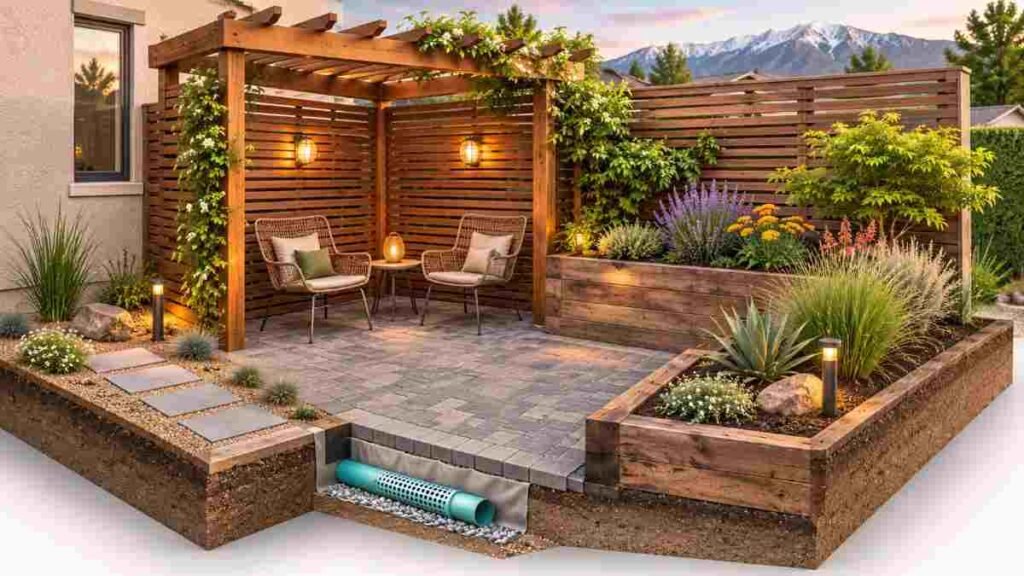
When ground space is limited, the eye needs somewhere to go. Vertical elements help create that movement. An arbor can define an entry. A pergola can turn a dead corner into a sheltered seating area. Even a modest trellis or framed planting composition can add depth without consuming precious square footage.
Vertical design also helps a narrow area feel intentional instead of residual. The best versions do not overload the space. They give it proportion. That is one reason Cottonwood Landscapes often uses vertical structure sparingly and with purpose, rather than as a decorative afterthought. Thoughtful landscaping complements budget upgrades that increase rental value
Drainage and Grade Should Lead the Design
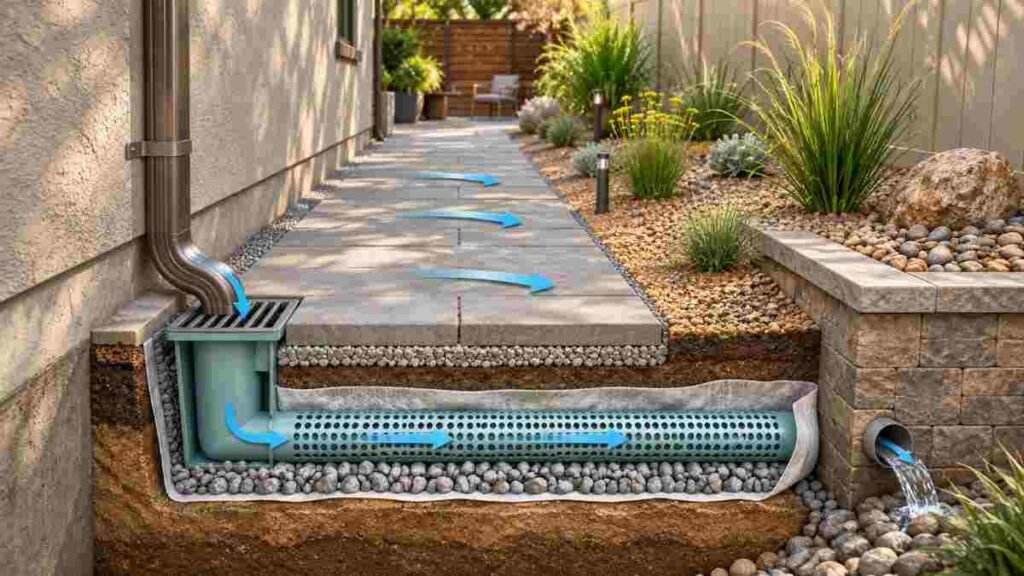
Many corner problems are actually water problems. If a downspout, slope, or hard edge is pushing water into the wrong place, planting alone will not fix it. In fact, the wrong plant selection can make the area harder to manage if the soil alternates between wet and dry conditions.
A strong solution may require:
- Regrading the area for better runoff
- Installing a retaining wall to correct elevation changes
- Adding drainage where water pools
- Choosing plant material that can handle the site conditions
- Using edging or hardscape boundaries to keep materials in place
This is where design-build experience matters. Cottonwood Landscapes does not treat drainage as a separate issue from aesthetics. In compact spaces, the two are inseparable.
The Most Durable Small-Space Solutions Are Low-Maintenance by Design
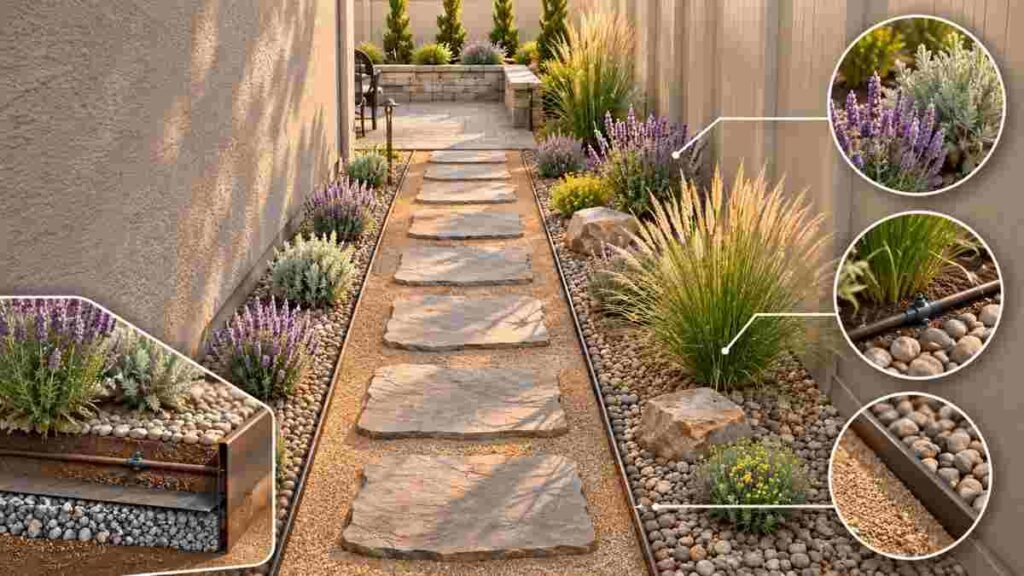
A narrow side yard is not the place for high-maintenance experiments. The smaller the space, the more obvious each maintenance burden becomes. That is why the most resilient designs tend to favor drought-tolerant planting, efficient irrigation, mulch, and hardscape surfaces that are easy to care for over time.
Xeriscaping is often a smart fit here, especially when the goal is to reduce water use without sacrificing structure. In a side yard, a restrained palette of native or drought-adapted plants usually performs better than a dense, mixed planting scheme. The result is cleaner visually and easier to maintain season after season.
Cottonwood Landscapes typically builds toward longevity rather than quick visual impact. That means choosing materials and layouts that can handle the real conditions of the site, not just the first season after installation. That usually means fewer weak points, less fuss, and a more stable landscape overall. Long-term outdoor care includes professional pool equipment maintenance.
What Strong Operators Do Differently in Utah
The difference between a decent idea and a durable outdoor space is usually in the execution. Utah’s climate asks more of a landscape than many homeowners realize. Freeze-thaw cycles, thermal expansion, slope, and soil behavior all influence whether a project still looks and functions well a few years later.
Strong operators do three things differently. First, they measure the site carefully before making design decisions. Second, they choose materials that match the climate rather than just the style preference. Third, they build transitions between spaces so the side yard or corner feels connected to the rest of the property.
That is where Cottonwood Landscapes stands out. With more than 35 years of experience across the Wasatch Front, the company brings regional judgment to what might otherwise look like a small project. That means a corner garden, a side path, or a compact seating nook is treated as part of a larger system, not a standalone feature.
A good side-yard solution should do more than “use the space.” It should make the property safer, easier to navigate, and more coherent. It should also feel like it belongs there. That level of fit comes from careful planning, not from adding one more feature and hoping it works.
For homeowners evaluating their own property, the right next step is often a design conversation before a construction decision. Cottonwood Landscapes can help translate an awkward side run or unused corner into something useful, stable, and visually integrated. If you want to see how that kind of approach comes together, explore the company’s work and process through Cottonwood Landscapes and start with the spaces that are currently doing the least for your home.