
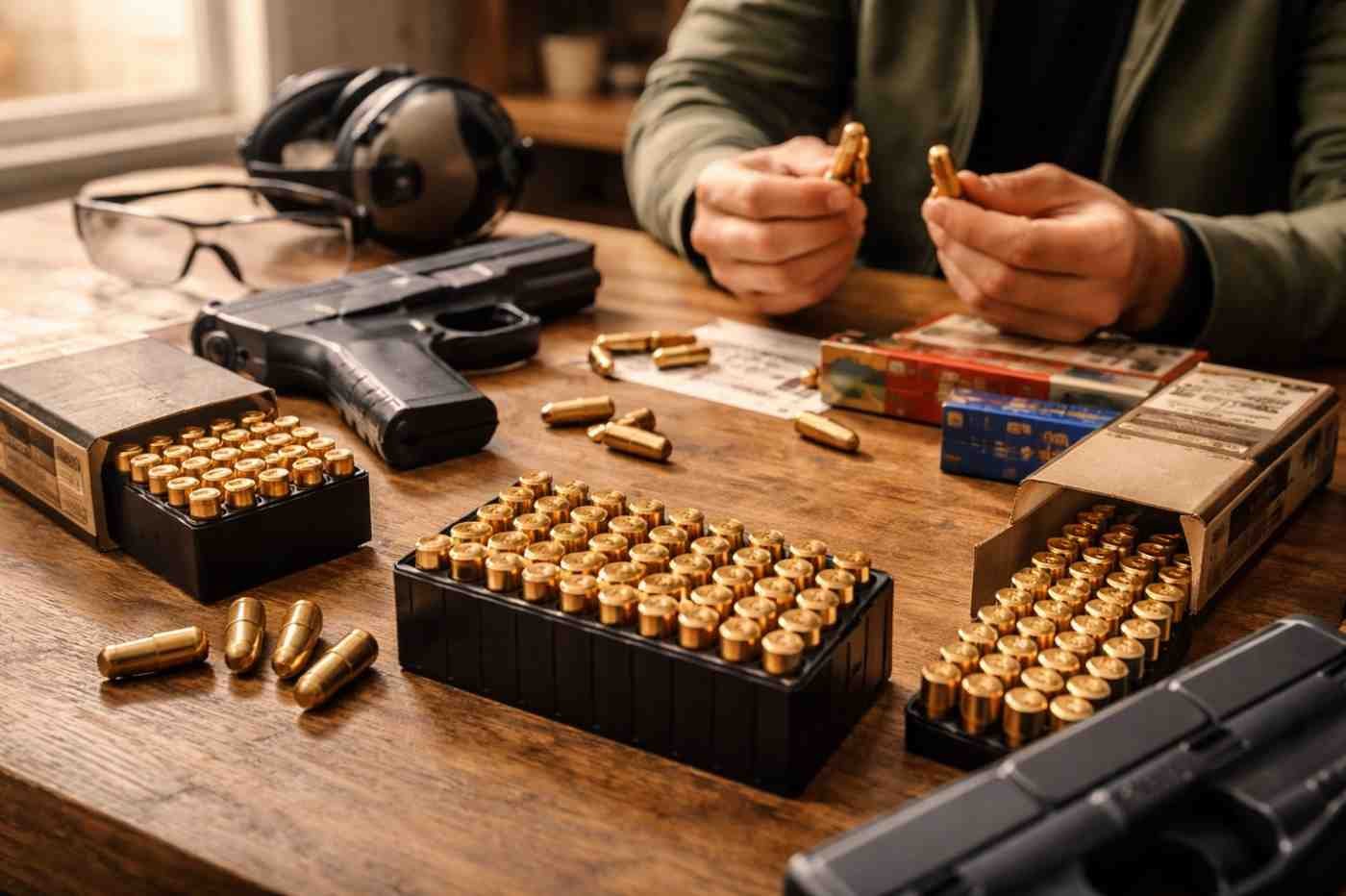
Many new gun owners feel lost the first time they stand in front of an ammo shelf. The choices seem endless, and each box looks different from the next. Some have different bullet shapes, others have different weights, and a few even have special labels that mean nothing to a first-time buyer.
Most beginners do not know that the wrong 9mm ammo choice can affect accuracy, reliability, and even safety. This guide explains what every beginner needs to know before picking up a box of 9mm rounds.
Know What You Plan to Use It For
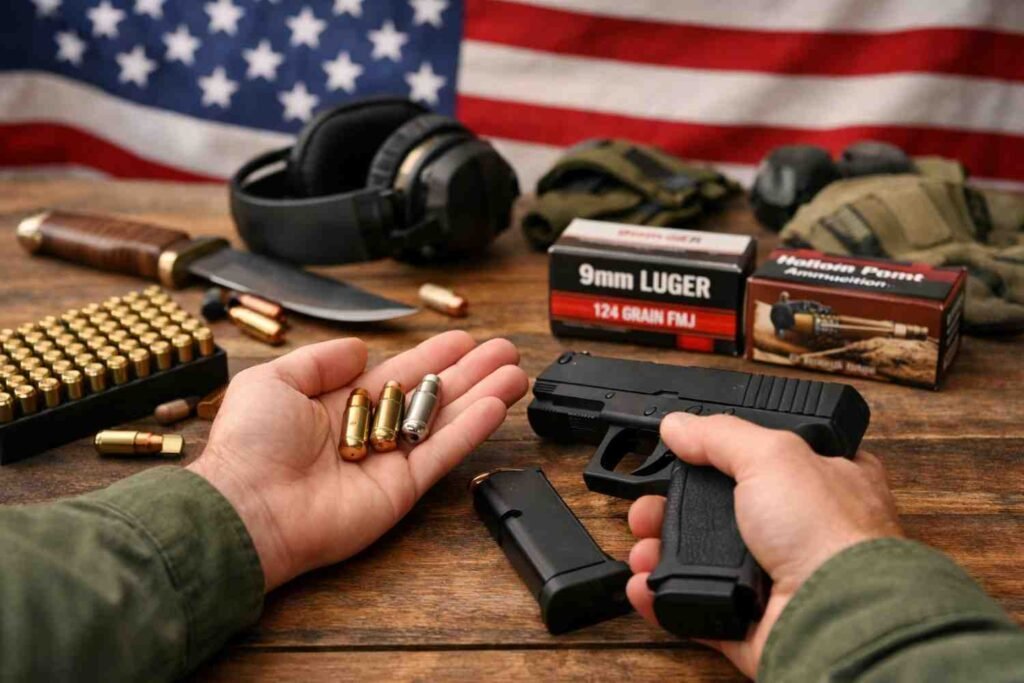
The first step is simple: ask yourself why you need the ammo. Do you want to go to a range and practice your aim? Or do you need something reliable for home defense? The answer to that question will point you in the right direction.
Ammo built for practice works differently from ammo built for defense. Most shooters keep two types on hand because each one serves a specific purpose.
Full Metal Jacket Rounds for Range Practice
Full Metal Jacket, or FMJ, is the go-to choice for target practice. The bullet has a soft core covered by a harder metal shell. This design makes it reliable and easy to find in bulk at a lower price. FMJ rounds feed smoothly in most pistols, which makes them great for high-volume practice sessions. New shooters who want to build their skills without spending too much money will find FMJ to be a smart and practical option.
Jacketed Hollow Points for Self-Defense
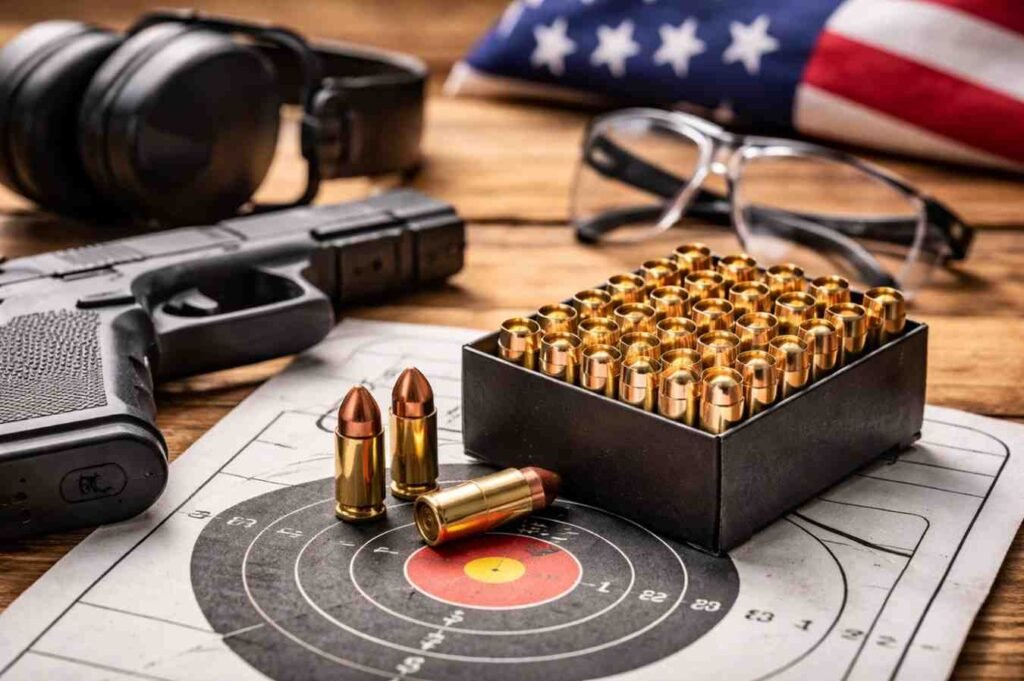
Jacketed Hollow Point rounds, or JHP, are built for one purpose: defense. The bullet has a hollow tip that causes it to expand on contact with a target. That expansion creates a larger wound channel and reduces the risk of the bullet passing through walls or other objects. Most law enforcement professionals carry JHP rounds for this exact reason. If personal protection is your goal, JHP is the most trusted and widely recommended choice available to you.
How Bullet Weight Changes Performance
Bullet weight matters more than most beginners expect. The most common 9mm weights are 115 grain, 124 grain, and 147 grain. A 115-grain bullet is lighter and leaves the barrel faster, which means less felt recoil. A 124-grain bullet sits in the middle and gives a good balance between speed and control. A 147-grain bullet is heavier and slower, but it produces a softer, more manageable recoil. Many shooters prefer 147-grain rounds for indoor ranges because they are also quieter.
Practice With FMJ, Carry With JHP
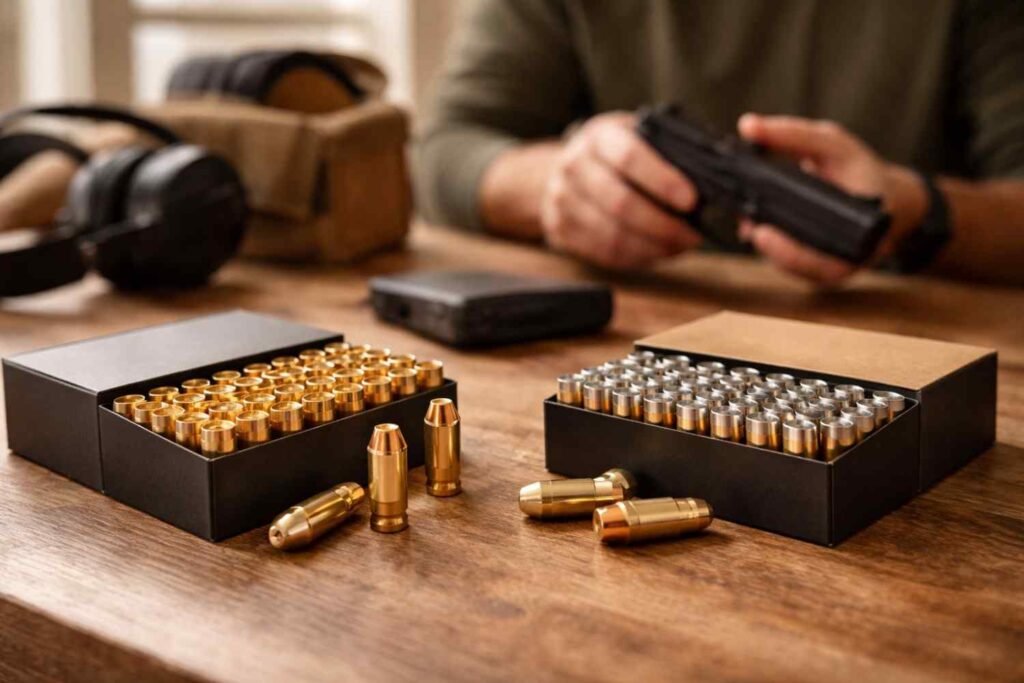
One of the most common habits among experienced 9mm shooters is to train with FMJ and carry JHP. FMJ ammo costs less, so it makes sense to use it for regular practice at the range. When it comes time to load up for daily carry or home defense, most people switch to JHP. This approach helps shooters build solid skills without draining their budget. It also ensures they have the most effective round available when it truly matters most.
Beginners should choose ammo based on purpose, bullet weight, and reliability in their firearm. FMJ works well for practice, while hollow-point 9mm ammo works well for defense. Bullet weight affects recoil and performance, so test a few options to find the best fit. Choose carefully, practice safely, and select ammo that works well in your maintenance checklist and firearm.