Adding an elevator to your home is a decision that goes beyond picking a model from a catalog. Knowing what the selection and installation process actually involves helps you move forward with confidence and avoid surprises along the way.
The Connection Between Home Size and Elevator Choice
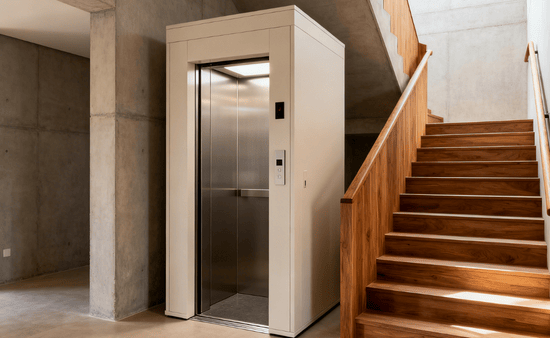
Not every elevator system is designed with compact homes in mind. Larger, more traditional systems built for spacious estates can overwhelm a smaller floor plan — both in terms of physical footprint and the structural work required to install them. For homeowners with modest square footage, the priority is finding a system that delivers reliable vertical access without consuming more space than necessary or triggering a full-scale renovation.
The good news is that the residential elevator market has expanded significantly in recent years. Compact, purpose-built systems now offer a genuine range of options for smaller homes, each with its own set of trade-offs between space efficiency, ride quality, weight capacity, and installation complexity.
Matching the Right System to Your Floor Plan
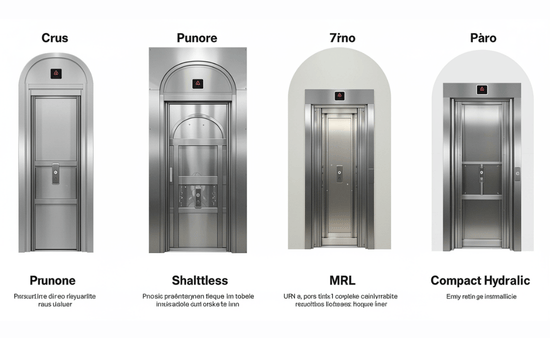
Choosing an elevator starts with an honest look at what your home can physically support. The following are the most practical options for homeowners working with limited space.
Pneumatic Elevators
Pneumatic elevators are among the most space-efficient systems available. They operate using air pressure differences to move the cab between floors and require no hoistway shaft, no pit, and no machine room. Their self-contained cylindrical structure is simply positioned in the desired location and anchored to each floor level.
For smaller homes where minimizing structural disruption is a top priority, pneumatic elevators are often the first system worth considering. Installation is faster and less invasive than most alternatives, and the transparent design can actually become an architectural feature rather than an eyesore. The primary limitations are a lower weight capacity and a smaller cab interior compared to more traditional systems.
Shaftless Elevators
Shaftless elevators are compact units that travel along a single wall or a small dedicated space, most commonly installed alongside an existing staircase. They do not require a full hoistway, making them one of the most retrofit-friendly options for homes that were not originally designed to accommodate an elevator.
These systems are slower than full-shaft elevators and carry lighter loads, but they represent a practical and cost-effective entry point for homeowners who need straightforward access between two floors without committing to a major structural project.
Hydraulic Elevators in Compact Configurations
While hydraulic elevators are traditionally associated with larger homes, compact hydraulic configurations do exist for smaller properties. These systems use a fluid-driven piston to move the cab and are known for their smooth, quiet ride and strong weight capacity.
A compact hydraulic system still requires a machine room and a pit, so it demands more planning than a pneumatic or shaftless unit. However, for homeowners who want the ride quality and durability of a hydraulic system without the full footprint of a traditional installation, a compact configuration is worth discussing with a qualified installer.
Machine Room-Less (MRL) Elevators
Machine room-less elevators mount the drive motor directly inside the hoistway, eliminating the need for a separate mechanical room. This saves meaningful square footage compared to conventional hydraulic or cable-driven systems while still delivering strong performance across multiple floors.
MRL systems are increasingly popular for both new construction and remodeling projects where space is at a premium. They strike a practical balance between ride quality, load capacity, and spatial efficiency that suits a wide range of home sizes and layouts.
Key Factors to Evaluate Before Deciding
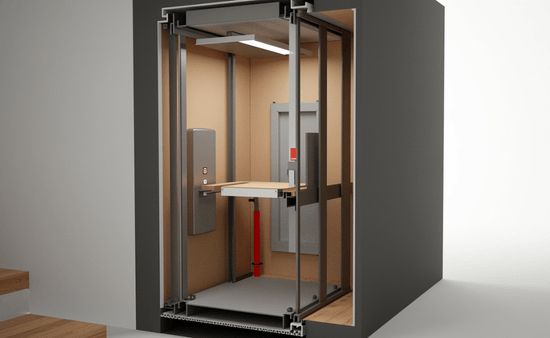
Once you have a sense of which system types are viable for your home, narrowing down the final choice comes down to a handful of practical considerations.
Number of floors is the starting point. Some compact systems are designed specifically for two-stop travel, while others can handle three or more floors. Matching the system’s capabilities to your actual needs prevents overspending on capacity you will never use.
Weight capacity matters more than many homeowners initially realize. If the elevator will regularly carry more than one person, or if it needs to accommodate a wheelchair or mobility scooter, the system’s rated capacity must reflect that from the outset.
Long-term maintenance is another factor worth weighing early. Some systems are simpler to service than others, and maintenance costs over the life of the elevator can vary considerably depending on the drive mechanism and the availability of local technicians.
Working With a Local Professional
The most reliable path to the right elevator is a professional site assessment. A qualified installer will evaluate your floor plan, identify the most practical placement options, and recommend a system that fits both your space and your budget.
Homeowners exploring small home elevators in Salt Lake City, UT, will also need to navigate local permitting requirements. Elevator installations require building permits and pass through multiple inspection stages before the system can be placed into service. A licensed local installer handles this process on your behalf, keeping the project on schedule and ensuring full compliance with applicable safety codes.
Conclusion
The right elevator for a compact home is the one that fits your space, meets your practical needs, and can be installed without turning your home into a construction zone. With the right professional guidance, finding that match is far more straightforward than most homeowners expect.