
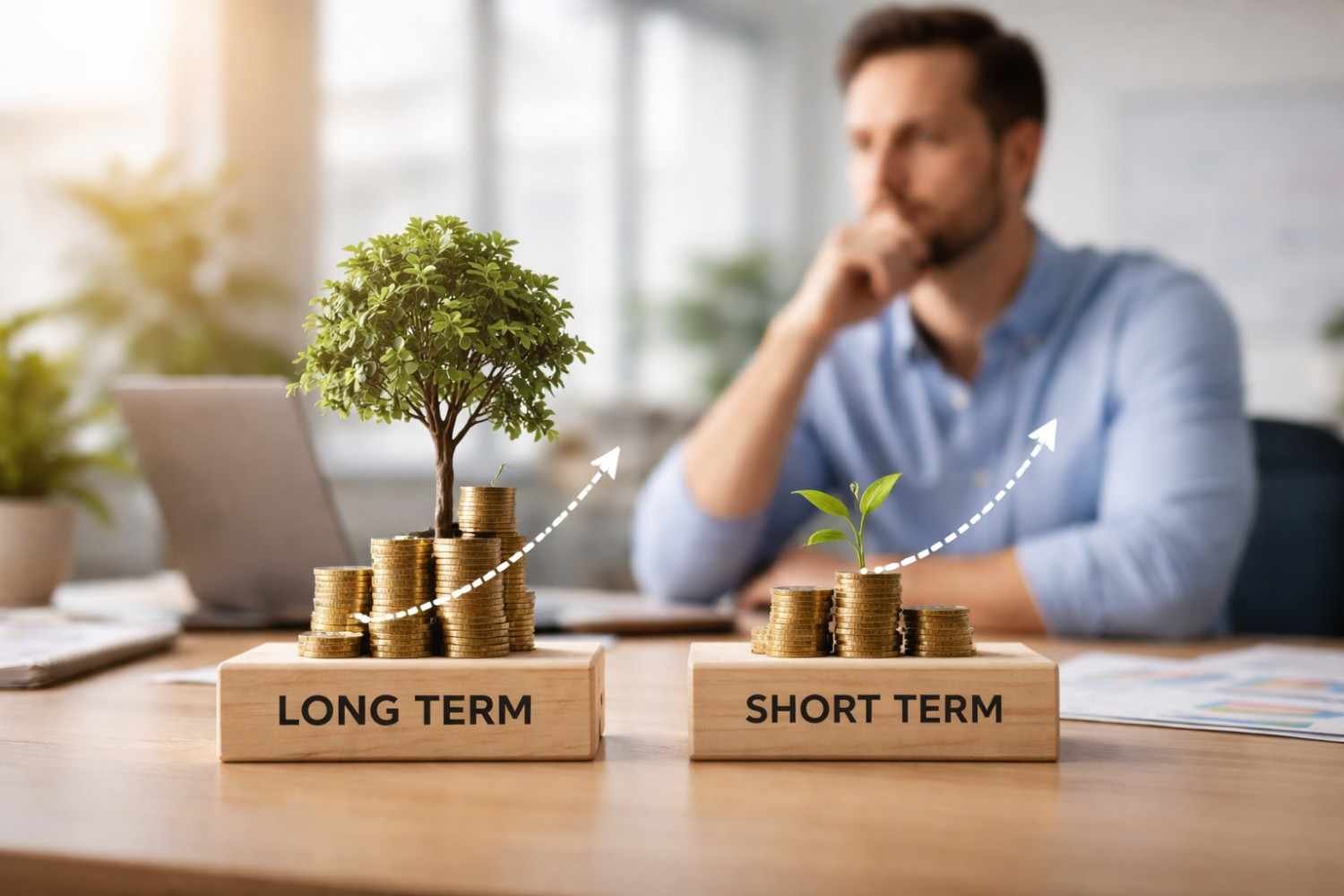
Most leaders say they care about the long game. Then quarter-end hits.
Revenue targets tighten. Investors ask harder questions. Teams feel pressure to show immediate wins. Suddenly, long-term planning gets pushed aside in favor of whatever moves the needle fast. I’ve seen companies rewrite strategy decks overnight just to meet short-term expectations. It works until it doesn’t.
The real tension in business isn’t ambition. It’s long-term planning vs short term growth. One promises durability. The other delivers momentum. But when you look at performance over 10 or 15 years, the results tell a more nuanced story.
What Long-Term Planning Actually Means

Long-term planning isn’t vague optimism about the future. It’s structured strategic planning built around a clear planning horizon, often three to five years or more, with defined investments, measurable milestones, and a strong long-term vision.
It usually includes:
- R&D investment
- Talent development
- Market positioning
- Infrastructure scaling
- Brand equity building
Research from McKinsey & Company shows that companies with a long-term orientation significantly outperform short-term–focused peers over time. Over a 15-year period, long-term companies achieved:
- 47% higher revenue growth
- 36% higher earnings growth
- 212% cumulative earnings growth vs. 92%
- 81% higher economic profit growth
- Nearly 12,000 more jobs were created on average
These aren’t marginal differences. They’re structural.
Long-term companies also showed lower revenue volatility and continued investing during downturns. Between 2007 and 2014, long-term firms increased R&D spending at 8.5% annually, while others grew at just 3.7%. That resilience compounds.
The Power And Risk Of Short-Term Growth

Short-term growth strategies focus on immediate outcomes. Tactical planning. Quarterly revenue. Performance metrics that show visible progress.
There’s nothing inherently wrong with that. In fact, short-term wins can:
- Build internal momentum
- Strengthen investor confidence
- Validate execution capability
- Provide measurable KPIs
The problem starts when short-term objectives replace long-term direction.
Excessive short-termism often leads to:
- Cost-cutting that weakens innovation
- Reduced R&D investment
- Over-optimization for quarterly earnings
- Leadership decisions driven by optics
Over time, this can starve a company of sustainable growth.
However, there’s nuance here. Certain private equity–driven restructurings focused on efficiency, cost discipline, and operational improvements have produced long-term structural benefits after exit. Short-term intensity, when aligned with future direction, can sharpen performance.
Short-term growth isn’t the villain. Misalignment is.
Why Long-Term Strategies Tend to Win Over Time

When we look at long term planning vs short term growth, the long-term model consistently shows stronger financial health.
Here’s why.
1. Crisis Resilience
During financial downturns, long-term–focused companies continue strategic investment instead of retreating. That consistency creates competitive gaps when markets recover.
Companies that cut deeply during recessions often struggle to regain innovation speed. Those that maintain long-term investment pipelines emerge stronger.
2. Lower Volatility
Revenue for long-term firms historically shows lower standard deviation compared to short-term peers. Stability reduces reactive decision-making and supports predictable scaling.
Lower volatility also builds trust with employees, investors, and customers.
3. Stronger Shareholder Returns
Long-term companies are significantly more likely to land in the top decile for total shareholder returns within their industries. That’s not about luck. It’s about compounding strategy.
Short-term wins spike performance. Long-term strategy sustains it.
The Strategy Paradox: Why You Can’t Ignore Either

Here’s where most conversations oversimplify things.
It’s not a binary choice.
Relying solely on long-term goals without actionable execution leads to stagnation. Vision without milestones is fantasy.
At the same time, hyper-focus on quarterly metrics can erode innovation, culture, and long-term competitiveness.
The real winning formula looks more like dynamic optimization:
- Use short-term KPIs to track execution
- Align every short-term objective with a broader roadmap
- Treat tactical goals as stepping stones, not endpoints
Short-term growth should accelerate long-term success, not replace it.
When Short-Term Growth Should Take Priority

There are moments when immediate execution matters more:
- Cash flow constraints
- Turnaround situations
- Market entry phases
- Competitive pressure spikes
In these cases, tactical goals protect survival. But even then, the planning horizon shouldn’t disappear. It should compress, not collapse.
Strong leaders zoom in and zoom out constantly. They adjust operational focus without losing future direction.
So, Which Strategy Wins?
If you’re measuring over quarters, short-term growth often wins.
If you’re measuring over decades, long-term planning dominates.
The data consistently shows that companies committed to sustainable growth outperform those chasing immediate gains alone. But the most successful organizations don’t pick sides. They integrate.
Short-term wins fund long-term ambition. Long-term vision guides short-term execution.
That’s the balance.
Frequently Asked Questions (FAQs)
1. What is the main difference between long-term planning and short-term growth?
Long-term planning focuses on future direction, multi-year investments, and sustainable growth. Short-term growth emphasizes immediate performance metrics and tactical execution.
2. Can short-term strategies harm long-term success?
Yes, if they lead to underinvestment in innovation, talent, or infrastructure. Excessive focus on quarterly results can weaken long-term competitiveness.
3. Why do long-term companies perform better during crises?
They maintain investment in R&D and strategic initiatives, which helps them recover faster and gain market share when conditions stabilize.
4. Is it possible to balance both strategies effectively?
Yes. The strongest businesses align short-term KPIs with long-term strategic planning. Execution supports vision rather than distracting from it.
Final Thoughts
When you look at long-term planning vs short-term growth, the answer isn’t emotional; it’s empirical. Long-term–oriented companies show stronger revenue growth, earnings expansion, economic profit, and resilience. They build systems that compound. Also, they invest when others retreat. They tolerate slower quarters because they understand trajectory matters more than spikes.
But ignoring short-term performance is reckless. Execution fuels strategy. Momentum funds’ ambition. The real advantage comes from aligning tactical wins with a durable long-term vision.
That’s where sustainable growth lives.